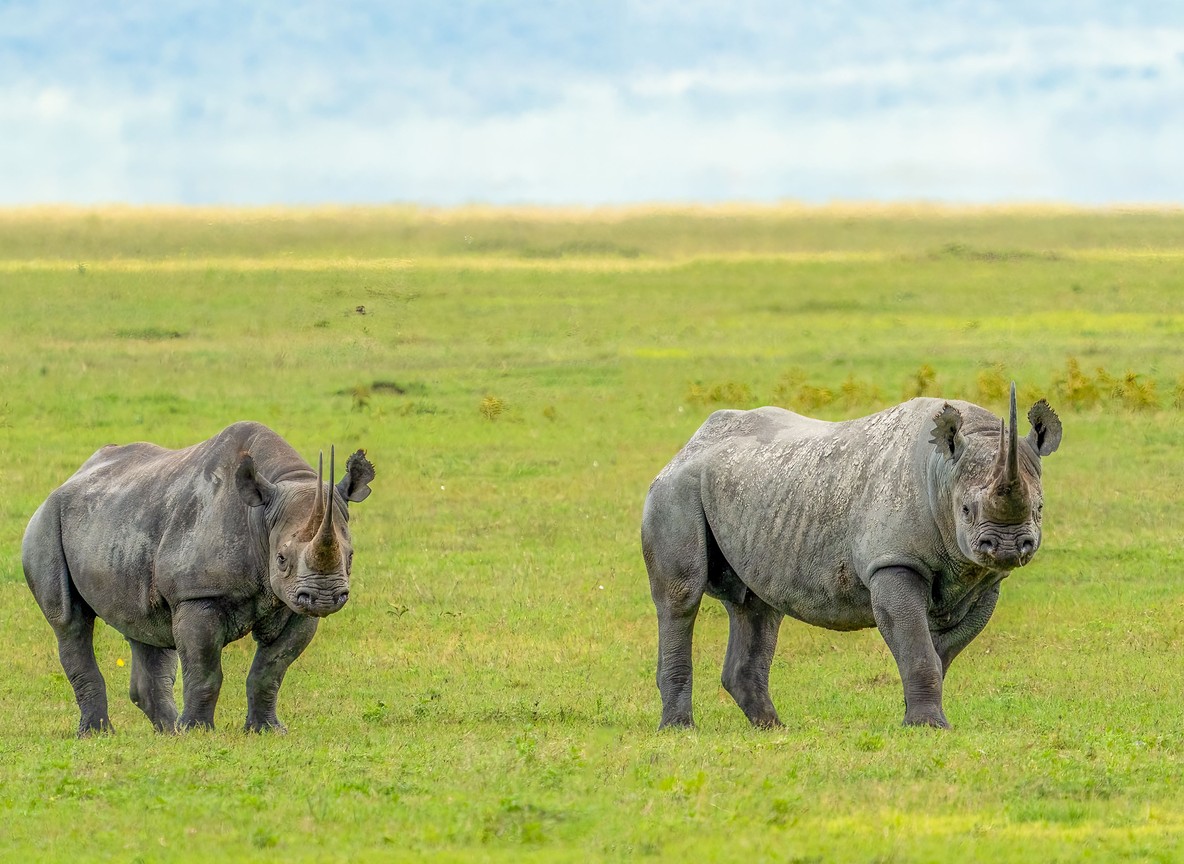
Kenya Wildlife Service is not managing black rhinos as one national herd. It is managing roughly a dozen separate, fenced or guarded populations, each with its own growth rate, and adding the results together. The midterm review of the 2022-2026 Black Rhino Recovery Action Plan, released this year by WWF-Kenya, KWS, and the Wildlife Research and Training Institute (WRTI), is the first hard look at how those individual sanctuaries are tracking against the shared 1,200-rhino target for December 2026.
Some named reserves are ahead of pace. Some are lagging. Touring Insights breaks down what the midterm review actually says sanctuary by sanctuary, and what that scorecard means if you want to plan a trip around seeing a black rhino this year.
What the Midterm Review Actually Found
The review’s headline number is not new: Kenya’s black rhino population passed 1,000 earlier this year, up from fewer than 400 in the 1980s. What is new is the sanctuary-level detail. WRTI’s monitoring data shows growth holding above the plan’s 5 percent annual benchmark in several of the larger, longer-established sites, while a handful of newer or smaller populations are growing slower than planned.
That unevenness matters because the national target is really a sum of local targets. A sanctuary that falls behind does not just miss its own number. It pulls down the country’s shot at 1,200 by December.
The Sanctuary-by-Sanctuary Scorecard
KWS and WRTI report black rhino numbers by site rather than as one running total, and individual counts shift through the year as census work and translocations land. The figures below are indicative estimates drawn from published KWS and conservancy reporting; confirm current counts directly with KWS before citing them elsewhere.
| Sanctuary | Approx. black rhino population | Size | Midterm pace |
|---|---|---|---|
| Ol Pejeta Conservancy | 150+ | 364 km2 | On pace, largest single population |
| Lewa Wildlife Conservancy | 100+ | approx. 250 km2 | On pace |
| Lake Nakuru National Park | 90-100 | 188 km2 | Near capacity, growth slowing |
| Aberdare National Park (Rhino Sanctuary) | 90-100 | 767 km2 (park total) | On pace |
| Ngulia / Tsavo West merged zone | growing from a smaller base | approx. 3,200 km2 | Behind pace, but expanding fast |
| Meru National Park (Rhino Sanctuary) | 40-50 | 870 km2 (park total) | Behind pace |
| Sera Community Conservancy | approx. 23 | not fenced, open community land | On pace for a young population |
Which Reserves Are Ahead of Pace, and Which Are Behind
Ol Pejeta and Lewa are the plan’s anchors. Both are decades-old, well-funded, well-staffed sanctuaries with long records of meeting or beating the 5 percent growth benchmark. Lake Nakuru is a different story: its fenced 188 km2 is now close to ecological carrying capacity, so growth there is expected to slow deliberately rather than push the park past what its habitat can support.
Meru’s Rhino Sanctuary, a fenced intensive protection zone inside the wider 870 km2 park, is the review’s clearest laggard. Its founder population is smaller and younger than Ol Pejeta’s or Lewa’s, and rhinos there have not yet reached the breeding-age numbers that drive fast growth elsewhere. The Ngulia zone inside Tsavo West is technically behind too, but for a better reason: its December 2025 merger with the Intensive Protection Zone nearly tripled its guarded footprint, and KWS is actively moving rhinos in to fill that new ground.
Why Translocations Are the Quiet Engine of the 1,200 Target
Kenya rarely grows its rhino count through birth rate alone in the sanctuaries that need it most. When a site like Lake Nakuru nears capacity, KWS moves a portion of its rhinos to a site with room, such as the expanded Ngulia zone or a newer community sanctuary. This is standard African rhino management, not an emergency measure.
Each translocation is a multi-day operation involving veterinary darting, crated road or air transport, and weeks of monitoring at the new site. KWS rarely announces a move in advance, for the animals’ security. If a named rhino you read about in an old article is not where expected on a later visit, a translocation is almost always the reason.
Lewa’s Role in the Push Toward 1,200
Lewa Wildlife Conservancy, in Meru County near Isiolo, has been one of Kenya’s steadiest rhino performers since the 1980s and is central to the midterm review’s positive column. It sits roughly 180 km and a 4-hour drive from Nairobi, or about an hour by scheduled flight to the Lewa Downs airstrip. For a deeper look at what a Lewa safari involves day to day, see our full Lewa Wildlife Conservancy guide or the side-by-side Ol Pejeta vs Lewa comparison if you are choosing between the two.
Where the Midterm Numbers Point You for a Safari
The scorecard has a practical upside for travelers. Sites that are ahead of pace, like Ol Pejeta and Lewa, offer the most reliable sightings right now because their populations are largest and most established. Sites catching up, like Ngulia inside Tsavo West, are worth watching over the next year or two as newly protected ground opens to game drives.
| Destination | Distance/time from Nairobi | Indicative entry fee (non-resident, per day) | Best for |
|---|---|---|---|
| Ol Pejeta Conservancy | 200 km, 3-3.5 hrs road, or 45 min flight to Nanyuki | USD 100-115 | Most reliable single-population sighting |
| Lewa Wildlife Conservancy | 180 km, approx. 4 hrs road, or approx. 1 hr flight to Lewa Downs airstrip | USD 100-130 | Steady growth, mixed rhino and Grevy’s zebra |
| Lake Nakuru National Park | 160 km, approx. 2.5 hrs road | USD 60-65 | Easiest day trip from Nairobi |
| Aberdare National Park | 160 km, approx. 2.5-3 hrs road | USD 60-65 | Forest-edge sanctuary setting |
| Ngulia / Tsavo West zone | 240-330 km, 4-5 hrs road via Mtito Andei or Voi | USD 60-65 | Newest expanding ground, fewer crowds |
Fees are indicative KWS and conservancy day rates and change without notice; confirm current pricing with the gate or your operator before booking.
Explorer Notes
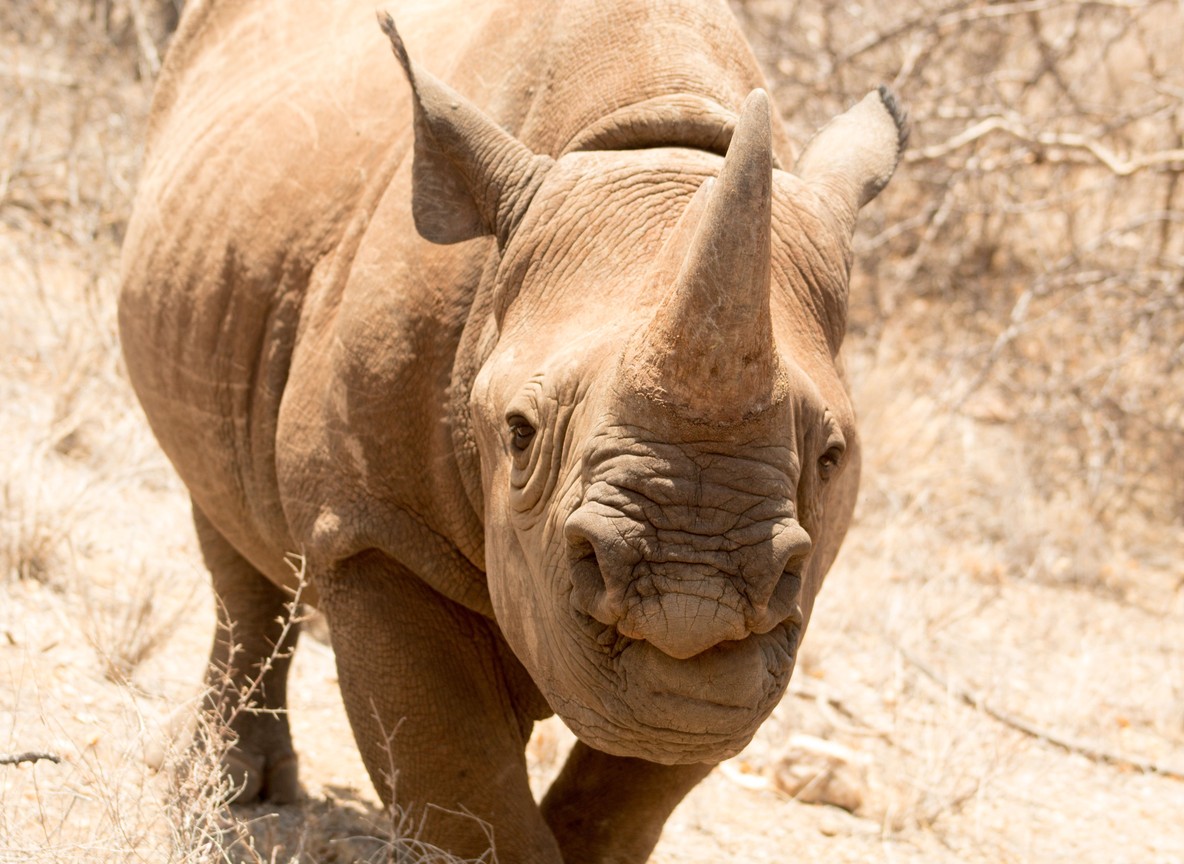
Ask your guide which specific sanctuary section you are entering, not just which park. Meru and Aberdare both run fenced rhino sanctuaries inside a much larger, unfenced park, so a general game drive may never enter rhino ground at all.
Morning drives beat afternoon ones for rhino activity almost everywhere on this list. Black rhinos are browsers that move and feed most in the cool hours after dawn, then bed down in thick cover once the heat builds.
If a sanctuary mentions a recent translocation, ask whether the newly arrived rhinos are still in a soft-release boma or already roaming open ground. Bomas are usually off the visitor circuit for the first several weeks.
Carry binoculars even at Ol Pejeta and Lewa. Black rhinos are solitary and often browse well off the main tracks, unlike the herd-forming white rhino you may spot in the same conservancies.
Frequently Asked Questions
What is Kenya’s black rhino population target for 2026? The current national plan targets 1,200 black rhinos by the end of 2026, up from a population that passed 1,000 earlier this year.
Which sanctuaries are ahead of pace according to the midterm review? Ol Pejeta Conservancy and Lewa Wildlife Conservancy are reported as tracking on or above the plan’s 5 percent annual growth benchmark.
Which sanctuaries are behind pace? Meru National Park’s Rhino Sanctuary and the still-filling Ngulia zone inside Tsavo West are behind, though Ngulia’s growth is expected to accelerate as its newly expanded protected ground fills in.
Why does KWS move rhinos between sanctuaries? Fenced sites like Lake Nakuru approach ecological carrying capacity, so KWS translocates rhinos to sites with more room, which also spreads genetic diversity across the national population.
Where is the most reliable place to see a black rhino in Kenya right now? Ol Pejeta Conservancy holds the largest single population and the most consistent sighting record, with Lewa Wildlife Conservancy close behind.
A midterm scorecard like this one shifts every few months as counts and translocations land, so treat any single number as a snapshot rather than the final word. Visit our Tour Packages page for an itinerary built around Ol Pejeta, Lewa, or Tsavo West, or ask a partner operator which sanctuary best matches your travel dates this year.
What to Read Next
- Want the full story on how Kenya’s plan works? Read Kenya’s Black Rhino Recovery Plan: 2026 Targets.
- Curious how the population climbed from under 400? See Kenya’s Black Rhinos Just Hit 1,000.
- Choosing between the two anchor sanctuaries? Compare them in Ol Pejeta vs Lewa Conservancy.